Showing posts with label adventure. Show all posts

Wednesday, March 20, 2013

"one mask of many worn by the Great Face behind"

The Secret of Life and its' multitudinous alleyways. This last article in The Immense Journey deals with the search for the secret, the key that would unlock the enigma. Within the pages the essay develops is the longing to discover the unanswered questions and the dead ends reached in the trajectory, yet towards the end there gleams a tiny speck of hope for the journey. This search is not merely concerning our origins but the tiny components that make up the earth, ourselves and organic beings around us, spanning eons back into the birth of this planet earth.
"...the wonderful correlation of parts, the perfect adaptiation to purpose, the individually vanished and yet persisting pattern..."
"It seemed clear that life was a material manifestation. Somewhere, somehow, sometime, in the mysterious chemisty of carbon, the long march toward the talking animal had begun."
Honestly, aside from the faulty dead ends described in the article, the misconceptions of having found the key by respected scientists, and the sensationalization of the search by the media, the article circles around the same theme: the search for the key to the secret of life and Loren Eiseley's own attitude and actions towards the search.
 "Nevertheless, as the years passed, the secret remained locked in its living jelly, in spite of larger microscopes and more formidable means of dissection."
One aspect I found interesting is the mention of the media, and how it disproportions the work of scientists and confounds the public. It is sadly comical that the same problems faced today in biology, archaeology, anthropology, physics, and scientific endeavors were being faced early on. Explicitly, media interpretation and the sensationalization of discoveries and scientific endeavors. I have no doubt in my mind that a great percentage of the world population has misconceptions concerning how evolution works, and what has been discovered concerning the evolution of this rock, the human species along with the other species.
This problem is related to the formation of kids in society, much like Michio Kaku and Neil Degrasse Tyson and others vociferate. Like this video:


I will end with some quotes from Loren Eiseley's essay.
"I am sure now that life is not what it is purported to be and that nature, in the canny words of a Scotch theologue, 'is not as natural as it looks.' (...) If the day comes when the slime of the laboratory for the first time crawls under man's direction, we shall have great need of humbleness."
*All quotes are from Loren Eiseley's The Immense Journey, Vintage Books 1959 edition. Title quote by Thomas Hardy, which is included in the end of Eiseley's essay.

Monday, April 30, 2012

Part Two: The Master and Margarita

I know I've been away for what it seems like a little while, but in my defense, these past two weeks have been very hectic. Though I am still just in time, for April is not yet over.

Source:
http://www.manuscriptsdontburn.org/categor/
complicites-the-master-and-margarita/page/4/
The second part of Bulgakov's The Master and Margarita opens up with Margarita, this is the first time the reader gets to know Margarita first-hand, in the previous part it is only through what the Master says of her, which is little. We meet her in her own opulent house, being married to a wealthy man, reminiscing about the Master, whom she misses sorely since he disappeared, but we the reader know he's in the mental hospital. In her melancholy she decides to go to the park. There she meets Azazello, one of the devil's entourage. Once she meets him and somewhat tells him her sad story of lost love and injustice done to him, the story proceeds to get even more bizarre, but in an ironic and entertaining way. She becomes a witch, flies to a ritual where she is crowned goddess/queen, meets the devil and the rest of his possee. Along the way, she extracts revenge from the editors and writers that did the Master wrong. Towards the end of the surreal journey, now in the devil's somber chamber, while he plays chess, she pledges her devotion and asks that he bring back the Master. After a brief hesitation he does so, to her and the Master's surprise.

The story ends slightly dubiously, the story of the procurator of Judea is revisited and loose ends are tied, also, the Master and Margarita finally get to their small home we not not where, where they are to live in eternal peace. Ivan Homeless gets the ending of the Master's story and Woland leaves Moscow leaving a trail a destruction inflicted by Behemoth and Koroviev.

Behemoth and Koroviev during the famous séance. Source:
http://my.opera.com/mustainev/blog/2012/03/09/master-and-margarita-by-mikhail-bulgakov-2
Margarita the witch flying to her coronation. Source:
http://www.cafleurebon.com/galbanum-and-other-strangers-master-
and-margarita-by-michael-bulgahov-vol-a-nuit-draw/
I have reduced the second part of the book to the barest words but truly the book is a delight. First, because for those that enjoy fantasy, they will get a good does of that. Woland's magic tricks, the séance, everything he and his entourage do takes the reader's level of belief to a further level. Add to that the eerie, grotesque, yet enchanting ball that is held in Margarita's honor, where all the dead are risen from their graves and their stories are retold as they pay homage to the queen Margarita. The characters are all so colorful and poignant. I especially loved getting to know Margarita and seeing her transform into a witch. And the Master, towards the end, when he is almost reaching his eternal abode of peace, how he is described as he says farewell to the city and life he has known is reminiscent of a messiah.
"'Forever! That's a lot for a man to grasp,' whispered the Master, licking his dry, cracked lips. He listened carefully to what was going on in his soul. For a moment, his excitement seemed to turn into a feeling of deep, mortal insult. But the sentiment was fleeting. It vanished to be replaced by proud indifference and finally settled into an expectation of eternal peace. [...] 'Well, then, 'Woland said to him from high up in the saddle, 'are all the accounts settled? Have all the goodbyes been said?' 'Yes, it is over,' the Master said, calming down,  and looked directly into Woland's face without fear. [...] It had all fallen through the earth, leaving nothing but fog."
Secondly, the book is an enlightening delight because the reader is constantly faced with the weighing of good and evil. What does it mean to be evil? And likewise, what does it mean to be good? Tying this up with Mikhail Bulgakov's time and the context within which he created this book, the nation's insecurity and mistrust as everything around them was changing, the obligation to follow the imposed norm, the disappearances, all the nuances that plagued Moscow during his time as Stalin rose to power is evident. Also, another important aspect of the book is it's questioning of faith, on the veracity of faith and belied versus of non-belief. There is an interplay within these two extremes throughout the novel that ends with more questions than answers.

I highly recommend this book, it was an exciting, intriguing and revealing read. Also, there are so many awesome pictures relating to The Master and Margarita that I couldn't help posting at least three.


Friday, March 16, 2012

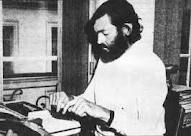
Historias Que Me Cuento de Julio Cortázar

Un hombre tiene que tener sus lujos secretos, sus callados despilfarros, cosas que otros aprovecharían hasta la última migaja.
Comienza éste cuento, "Historias Que Me Cuento", con un narrador soñador, apto para crear cuentos, los cuales se cuenta en la oscuridad de la noche antes de dormir. A veces al lado de su mujer y muchas veces solo. Tanto así, que estos mismos cuentos se vuelven sus sueños. De aquí el narrador parte para explicar cómo elabora sus cuentos, en ellos él es en muchas ocasiones un camionero, aventurero, atravesando "montañas y rutas que daban miedo". En estas historias que crea, llenas de lo inesperado y lo esperado, el protagonista comúnmente se topa con mujeres que recoge en el camino. Viajantes solitarias que necesitan la ayuda de un camionero que las cobije de los terrores de la noche. Es en una de estas historias con la que el narrador se encuentra con Dilia, "la noche vacía y una interminable espera al borde de la ruta en la que cada pájaro nocturno era una amenaza", ella en la soledad de la penumbra al pie de unas rocas. Sucede lo esperado, conversación, beber, comer, descanso y luego sexo. Lo inesperado en todo momento es que Dilia es la que está en este sueño, no una desconocida sino una conocida y casada.

El sexo que transcurre entre ellos dos, el camionero y Dilia esta lleno de ternura y de longevidad, no de lo furtivo de la noche que suele popular el coito con el que se topa frecuentemente el camionero. Habiendo saciado su deseo, el narrador despierta del sueño para confrontar a su pareja, y con ella lo cotidiano. El se detiene pero no le cuenta el sueño a su pareja, y el día prosigue como debido.

Meses después, se reúnen las dos parejas, El y Niágara, Alfonso y Dilia. En esa noche comparten la muerte de la madre de Dilia, luego risas, bromas y coñac. En un momento, Dilia cuenta como ella se quedó extraviada y necesitada de ayuda durante ese tiempo en que viajaba a ver a su madre en sus últimos días de vida. Un camionero paró y la recogió. Este relato que ella comparte tiene dos partes, ella sólo comparte la primera con los otros. Ya tarde en la noche y bien curados con el coñac, el bebé de Dilia llora y ella corre a su lado. Aparte, mientras Alfonso y Niágara conversan y continúan bebiendo, el narrador se aparta y se dirige hacia Dilia, que le cambia el pañal a su bebé. En este instante es la tensión protagonista. El narrador la mira y ella se voltea y se miran a los ojos. El le confiesa que conoce la segunda parte de su relato, que ella se acostó con el camionero.

Ya expuesto en palabras reducidas el cuento, ahora hablaré sobre las maravillas de Julio Cortázar, como él entrelaza la realidad y la fantasía en un cuento. El juego de palabras con el cual tiende sus historias. ¿Cuál será la verdad de éste cuento? ¿Habrá sucedido de verdad el sueño del camionero? ¿Serán ellos dos, Dilia y el narrador, amantes?

En este cuento se ve claramente plasmado el deseo y lo maternal entrelazados y además, una melancolía permea cada imagen dibujada por las palabras de Cortázar. Es como si lamentara esos deseos y hasta posibles amores que no pueden llegar a florecer por circunstancias externas concretas.

This short story by Julio Cortázar, "Historias Que Me Cuento", features a dreamer for a narrator, one who weaves stories before going to sleep in order to expatriate himself from the tangible routine of daily life. These stories he creates often transform themsleves into dreams that populate his sleep. It recurs that in these dreams he is a trucker, enamored with the idea of freedom in the open road, the unexpected and the new. It so happens that in one of these stories he stumbles unexpectedly with Dilia, a woman he knows, stranded and alone at the mercy of the night. This he finds odd and surprising because the women he normally picks up in these creations of his mind are always unknown. As accustomed, he picks her up and rescues her from the rocky and solitary night. The expected occurs, conversation, drink, eat and sex. Yet, the union they share is not tainted with the customary furtiveness and insignificance that permeates his past encounters. This one holds a tenderness and longevity the narrator did not expect. Later, they sleep and he awakes to be confronted with his real and tangible woman, Niágara.

Months later, both couples, Niágara and the narrator, Alfonso and Dilia, meet for dinner and an evening of amiability. They eat, drink and share jokes over cognac. Further on in the night, Dilia retells an event that occurred to her on one of her visits to her mother during her last days of life. She was stranded, late in the night, and a trucker stopped and picked her up, rescuing her. This story had two parts, she only retold the first part to the others when her baby began crying from another room. She immediately went to the baby. The narrator finds his chance and leaves Alfonso and Niágara conversing. This is the moment when the tension seeps throughout the scene. The narrator approaches Dilia, she turns, and they both look each other in the eye and he tells her that he know the second part to her story, she slept with the trucker.

Now, what I find enchanting about this short story is the melancholy that pervades throughout the images created by Cortázar. In many ways, it's a quiet lament for impossible desires and even loves that are not able to flourish due to external concrete circumstances. All this, the maternal and desire interweaving, is once again exposed through Cortázar's excellent ability to intermingle reality with fantasy. His talent for warping time, space, the real and fantasy is latent in his sentences.

Monday, November 29, 2010

Alfred Tennyson's "Ulysses"


It little profits that an idle king,  
By this still hearth, among these barren crags, 
Match’d with an aged wife, I mete and dole 
Unequal laws unto a savage race, 
That hoard, and sleep, and feed, and know not me. 

I cannot rest from travel: I will drink 
Life to the lees: All times I have enjoy’d 
Greatly, have suffer’d greatly, both with those 
That loved me, and alone, on shore, and when 
Thro’ scudding drifts the rainy Hyades 
Vext the dim sea: I am become a name; 
For always roaming with a hungry heart 
Much have I seen and known; cities of men 
And manners, climates, councils, governments, 
Myself not least, but honour’d of them all; 
And drunk delight of battle with my peers, 
Far on the ringing plains of windy Troy. 
I am a part of all that I have met; 
Yet all experience is an arch wherethro’ 
Gleams that untravell’d world whose margin fades 
For ever and forever when I move. 
How dull it is to pause, to make an end, 
To rust unburnish’d, not to shine in use! 
As tho’ to breathe were life! Life piled on life 
Were all too little, and of one to me 
Little remains: but every hour is saved 
From that eternal silence, something more, 
A bringer of new things; and vile it were 
For some three suns to store and hoard myself, 
And this gray spirit yearning in desire 
To follow knowledge like a sinking star, 
Beyond the utmost bound of human thought. 

 This is my son, mine own Telemachus, 
To whom I leave the sceptre and the isle,— 
Well-loved of me, discerning to fulfil 
This labour, by slow prudence to make mild 
A rugged people, and thro’ soft degrees 
Subdue them to the useful and the good. 
Most blameless is he, centred in the sphere 
Of common duties, decent not to fail 
In offices of tenderness, and pay 
Meet adoration to my household gods, 
When I am gone. He works his work, I mine. 
  
There lies the port; the vessel puffs her sail: 
There gloom the dark, broad seas. My mariners, 
Souls that have toil’d, and wrought, and thought with me— 
That ever with a frolic welcome took 
The thunder and the sunshine, and opposed 
Free hearts, free foreheads—you and I are old; 
Old age hath yet his honour and his toil; 
Death closes all: but something ere the end, 
Some work of noble note, may yet be done, 
Not unbecoming men that strove with Gods.  
The lights begin to twinkle from the rocks: 
The long day wanes: the slow moon climbs: the deep 
Moans round with many voices. Come, my friends, 
’Tis not too late to seek a newer world. 
Push off, and sitting well in order smite 
The sounding furrows; for my purpose holds 
To sail beyond the sunset, and the baths 
Of all the western stars, until I die. 
It may be that the gulfs will wash us down: 
It may be we shall touch the Happy Isles, 
And see the great Achilles, whom we knew. 
Tho’ much is taken, much abides; and tho’ 
We are not now that strength which in old days 
Moved earth and heaven, that which we are, we are; 
One equal temper of heroic hearts, 
Made weak by time and fate, but strong in will 
To strive, to seek, to find, and not to yield. 


Here is a poem for the week. It is Tennyson's Ulysses. In this poem Tennyson takes the medieval hero in Dante's Inferno and Homer's Odysseus from the Odyssey and merges the two to create the speaker in this poem, a mature Ulysses. This is a dramatic monologue and in it we glean a Ulysses that has been in Ithaca for a time now, after returning from the long voyage depicted in the Odyssey. This Ulysses expresses his desires to seek new worlds, the sea beckons, adventure calls and facing all this he feels he cannot rest in his safe and humdrum Ithaca while out in the world there is much to see.


I identify perfectly with this poem and I love it, the words are full of strength and courage, yearning and discoveries. Aside from the general idea the monologue transmits, I also find that this poem proposes unique and interesting ideas. Experience is knowledge that is learned as one moves and travels, learning and seeing new things. Experience is also a vitality that adds energy and drive to one's life. Life isn't what happens as one sits still, in one place, but what one sees and learns as the adventure grows and takes us to new places, sights and people. 


Technically, the poem is divided into three parts, in the first he is speaking to the general audience surrounding him, in the second he is referring to Telemachus his son, to whom he is leaving his whole inheritance and Ithaca itself, and in the third part he is referring to his sailors, those who have ventured and battled with him, arming them with courage for the new adventure that begins and the closing of the poem.


As you, dear reader reads this poem I hope its' words infuse you with inspiration and courage. It is a wonderful poem, and it might help if it is read out loud, with ardor. 
Follow the rabbit trail...