

Showing posts with label short story. Show all posts
Showing posts with label short story. Show all posts
Wednesday, April 17, 2013


Monday, April 8, 2013
melancolía y prosa
I'm currently reading "The Tin Drum" by Günter Grass and the epic poem "Idylls of the King" by Lord Tennyson. While I'm enjoying both these reads I decided to showcase the work of a young caribbean musician, writer and poet, Babá. He writes mostly in spanish although he is a fluent english speaker and writer. He writes mostly poems, short stories, and compact ideas and impressions.
I begin with an untitled short story.


I begin with an untitled short story.


Wednesday, October 10, 2012
A hundred battles, a hundred losses
This month I begin with Ch'ae Man-Shik's short story "A Ready-Made Life" translated by Kim Chong-un and Bruce Fulton. It was first published in 1934 in the journal Shindonga. As for the writer, he is a novelist, an essayist, and a critic, often considered a satirist. His works are widely known.
As for the short story itself, I came across it as a follower of ktlit.com. A website dedicated to the translation and dissemination of Korean literature.
The story itself immediately opens with an interview. P is an unemployed, educated man being interviewed and denied by K. The context of the drama is within the early 20th century, the dawn of modernization, after the rise of intellectuals and a propagation of education, post-Japanese Imperial Period, during the evident domination of Japan over Korea. Now, from the rejection given to P proceeds a dejected summation of his living situation, the harsh condition in which he is forced to live, eating sparingly, not being able to pay his room rent, leading a meagerly existence, etc. I add that the description and the existential manner in which the character recounts his surroundings and his life has a touch of Dostoyevsky. P is also a divorced man with a son. Although his son does not live with him at the opening of the story, it is made clear that due to his family's inability to continue to care for him, they will be sending P's son over to him in Seoul. Yet they do not know that P is hardly able to support himself as he has not found a job.
In the trajectory of the story there are very few characters presented, the two introduced after P, are also unemployed and hopeless, friends of the protagonist. Both have likewise been educated and are intellectual men. The dejection of all the characters is poignantly felt. And the irony is that being educated and an intellectual is a void endeavor leading to unemployment. The stark line between the country as a passing farming nation, and moving unto becoming modernized is evident. The job market is saturated, yet those that have been educated cannot make themselves nor even know how to go about retroceding and forming part of the farming population. The educated intellectuals are displaced.
Drunk and in a bar, P and both of his friends go to a brothel. There P is thrown, by his two friends, towards a young prostitute. He panics and runs out when she is willing to sell her integrity, her sex, for a beggarly price. This leads to a digression on the worth of integrity, in which P spends a considerable time debating.
The story ends in an ambiguous manner. It is clear P does not want his son to be educated and fall into the same trap he himself fell and therefor, what becomes of P as he takes in his son is left open-ended.
Why do I recommend this short story by Ch'ae Man-Shik? Because the themes, albeit during a time that has passed, are still relevant today. The tone of P's hopelessness, the use of education during unstable economic times, the value of a person's integrity in regards to money, are all still current. How much is integrity and virtue worth?
As for the short story itself, I came across it as a follower of ktlit.com. A website dedicated to the translation and dissemination of Korean literature.
The story itself immediately opens with an interview. P is an unemployed, educated man being interviewed and denied by K. The context of the drama is within the early 20th century, the dawn of modernization, after the rise of intellectuals and a propagation of education, post-Japanese Imperial Period, during the evident domination of Japan over Korea. Now, from the rejection given to P proceeds a dejected summation of his living situation, the harsh condition in which he is forced to live, eating sparingly, not being able to pay his room rent, leading a meagerly existence, etc. I add that the description and the existential manner in which the character recounts his surroundings and his life has a touch of Dostoyevsky. P is also a divorced man with a son. Although his son does not live with him at the opening of the story, it is made clear that due to his family's inability to continue to care for him, they will be sending P's son over to him in Seoul. Yet they do not know that P is hardly able to support himself as he has not found a job.
 |
| Japanese woodblock print, The First Sino-Japanese War. Japan in Korea. Source: http://www.japanfocus.org/-Wada-Haruki/2934 |
"Ready-made commodities turned shopworn."The story can be divided in two seamless parts, the first if the already described rejection during the interview and the description of P's existence, then, P's confrontation with a prostitute.
Drunk and in a bar, P and both of his friends go to a brothel. There P is thrown, by his two friends, towards a young prostitute. He panics and runs out when she is willing to sell her integrity, her sex, for a beggarly price. This leads to a digression on the worth of integrity, in which P spends a considerable time debating.
The story ends in an ambiguous manner. It is clear P does not want his son to be educated and fall into the same trap he himself fell and therefor, what becomes of P as he takes in his son is left open-ended.
Why do I recommend this short story by Ch'ae Man-Shik? Because the themes, albeit during a time that has passed, are still relevant today. The tone of P's hopelessness, the use of education during unstable economic times, the value of a person's integrity in regards to money, are all still current. How much is integrity and virtue worth?
"You can't put your heart into work if your stomach is empty."The story itself can be found here, in PDF form. It is well worth a read.
Monday, July 23, 2012
Severanda y El Jaguar
Este 'post' viene pulsante y feral. Esta vez con el cuento El Jaguar todavía parte de "Amoricidios". Antes que nada, éste es un cuento corto y directo. Desde el comienzo, se lanza dentro del trama sin reparos. Un hombre llamado John conoce a una mujer, Severanda, en un nightclub. Ella, cuerpo grande y violento. El, lento y trémulo, tarde para todo. Severanda le llamó la atención de inmediato. Al ver el interés, pero que él no iniciaba ningún acercamiento, ella cruzo la brecha y se introdujo. Él es poeta. Ella tiene un jaguar.
Días siguientes, el llega a la casa de Severanda y toca la puerta. Ella aparece

John entra, para su desgracia, porque minutos después, al ella ir a buscarle algo de beber desata su jaguar. Luego de dos rugidos, sale el animal y va directo al yugular. La historia termina sangrienta, en un charco de muerte, carne y lagrimas.
Lo más que resalto del cuento es lo visceral e intenso que se presenta. En apenas cuatro paginas las palabras del autor logran transmitir sensaciones tan intensas como las que seguramente sintió John al verse atraído por Severanda. Aquí se plasman las emociones apasionadas y extremas que acompañan una atracción, y cómo esas mismas emociones ciegan a uno. Porque John asumió de inmediato, cuando ella dijo que tenía un jaguar, que se refería al carro. Incluso, cuando llega a la casa de Severanda no se percata ni mucho menos se extrañó por la falta de muebles, sino el siguió su figura tentadora, semi-desnuda, y llena de promesas. Entonces, ¿con qué nos deja este cuento? Con la intensidad de la atracción y lo fatal que puede ser.
"John pensó que sin duda había cuadrado la noche, una jeva de este calibre, bien montada e inteligente... no pensó en la extraña combinación y por primera vez en su vida dejó de hacerse preguntas y decidió disfrutar la buenaventura."Después de varios silencios tenebrosos acordaron volverse a ver en unos dias. Intercambiaron teléfonos y se despidieron.
Días siguientes, el llega a la casa de Severanda y toca la puerta. Ella aparece
"como salida de catálogo de Victoria's Secret: el pelo caía como cascada, tan linda, ni una gota de maquillaje siquiera, la culebrilla en la division de las inmensas tetas... la suavidad que prometia la erizada piel era casi palpable."

John entra, para su desgracia, porque minutos después, al ella ir a buscarle algo de beber desata su jaguar. Luego de dos rugidos, sale el animal y va directo al yugular. La historia termina sangrienta, en un charco de muerte, carne y lagrimas.
Lo más que resalto del cuento es lo visceral e intenso que se presenta. En apenas cuatro paginas las palabras del autor logran transmitir sensaciones tan intensas como las que seguramente sintió John al verse atraído por Severanda. Aquí se plasman las emociones apasionadas y extremas que acompañan una atracción, y cómo esas mismas emociones ciegan a uno. Porque John asumió de inmediato, cuando ella dijo que tenía un jaguar, que se refería al carro. Incluso, cuando llega a la casa de Severanda no se percata ni mucho menos se extrañó por la falta de muebles, sino el siguió su figura tentadora, semi-desnuda, y llena de promesas. Entonces, ¿con qué nos deja este cuento? Con la intensidad de la atracción y lo fatal que puede ser.
I want now to hold in my hands
the fragrance of your flesh
and smell it.
I want to roam in your soul
and scoop the taste of your flesh.
–Kazuko Shiraishi
The Season of the Sacred Lecher
Wednesday, July 18, 2012
DAY AFTER PILL
–Tu eres mi Antonio Banderas.
–Y tú eres mi Gina Lollobrigida.
 |
| Source: http://resources.roomsnet.com/2010/02/19/ check-out-the-diviest-nightlife-in-nyc/ |
"Se retiraron borrachitos muchísimo antes de la hora triste para pescar un taxi amarillo que los llevara a la guarida de ella porque Tú eres mío cuesta notte, le había susurrado ella con la boca fría en una mordida de oreja y antes de irse se dieron un beso frente al local..."
 |
| Srouce:http://blog.petaflop.de/2008/02/ |
–Mierda.Uno de los factores que me atrajo al cuento, el cual ya mencioné brevemente, es el ritmo acelerado. Tan pronto empieza, las palabras parecen correr una tras otra, mientras tanto dibujando imágenes breves y marcadas. Uno tiene la sensación inmediata de la noche, la bebida, los besos oliendo a alcohol y cigarrillo, la espontaneidad, las palabras coquetas, miradas. Aparte del estilo, el final le da un toque sombrío y a la vez unificador. Los dos habiéndose confrontado, a la luz del sol, extranjeros y diferentes, frente a esta tragedia que ocurrió tan cerca se cierra la brecha que los distancio. Puede que tenga o no tenga suma importancia la substancia que contiene el cuento, me supongo que eso queda a manos de la perspectiva individual, no obstante, yo soy de la opinión que su relevancia reside en la demostración de que la vida nunca acaba de sorprendernos, de cogernos a la imprevista, y sobre todo de unirnos como humanos.
–Questo e veramente un casino, dijo ella bastante molesta.
Monday, July 9, 2012
UGDU y Otros Relatos: Rey Andújar
Hace varios meses atrás me regalaron, por pura casualidad, tres libros de una editorial local, La Secta De Los Perros. Estos tres libros yo los puse a un lado y me olvidé de ellos por completo, hasta ayer. En la búsqueda de material para este mes me ha dado con ojear los libros y uno de ellos, de cuentos, en particular, que se titula, UGDU Y Otros Relatos por Rey Andújar. El autor es un bailarín, dramaturgo, cuentista y novelista contemporáneo de la República Dominicana. Pues, da la segunda casualidad de que sus relatos me han cautivado por completo. Por lo tanto, el enfoque de este mes estará sobre los relatos de Rey Andújar.
El primer cuento, del cual hablaré hoy, se titula Doña Ana, Los Gallos Y El Monstruo De Samaná. La localización del trama se plasma justo al principio, todo ocurre en Samaná, una provincia de la República Dominicana que es peninsular. La protagonista es una vieja de doscientos años, Doña Ana, bruja y santera, llena de increíbles historias. Todo comienza cuando ella es visitada por un ángel que le demanda, de parte del Gran Hombre, que se ponga de su lado. La vieja lo niega, y luego es amenazada por un castigo. El primer castigo:
Nuevamente, Doña Ana es visitada por el ángel y termina accediendo a ir a la iglesia. De aquí prosigue una larga sucesión de sueños en los cuales ella va negando todas las imágenes presentadas hasta la ultima, en la cual ella esta descendiendo al infierno. Ahí conoce al que le da la solución al castigo del pueblo, de los gallos, del silencio que la entristece y llena de soledad. Sigue las instrucciones, y el castigo desaparece al despertarse. Luego, ella se aventura a la iglesia. Pero no pudo, y a mitad de sermón se va, con las siguientes palabras:
Lo que sucede al llegar la bestia horrenda a Doña Ana, y el final, se los dejaré para los que se topen con el libro.
Primero que nada, el cuento es ricamente descriptivo, las sensaciones vividas por Doña Ana son detalladamente expuestas. También, la ejecución del realismo mágico es balanceado y, en mi opinión, bello. No voy a pretender, después de haber leído el cuento varias veces, entender en su totalidad la narrativa, sería pretencioso de mi parte al igual que una mentira. Pero sí considero que el cuento merece varias lecturas y que su comprensión se plasma mejor en la psiquis que en la dialéctica. Lo que resalta entre todo es una dualidad inherente, lo malo es bueno y lo bueno es malo. Entonces, ¿qué es malo y qué es bueno? Esta gran pregunta es lo que me persiguió mientras leía. Por consiguiente, esta misma pregunta y dualidad se ve plasmada durante la cotidianidad de la vida. Mientras cada cual se encarga de hacer lo que le toca para su pan de cada día, la confrontación de lo que es bien y lo que es mal se da diariamente, ante las injusticias que ocurren con frecuencia, ante aquello "bueno" que tanto esperábamos que pasara mientras aquello "malo" nos ocurre o vice versa, ante lo malo disfrazado de bueno y, más grande que estos, ante el carácter represivo y autoritario (entre otros) que contiene la religión.
En fin, este cuento se merece una mirada bien puesta, da material para exprimir y reflexionar.
~
This month I will be focusing on a young contemporary writer from the Dominican Republic. I happened to receive his book of short fiction unexpectedly quite some time ago. But, I didn't come to read it till yesterday, as I was brainstorming ideas for this month and perusing my books. Before yesterday the book lay forgotten for months. I am incredibly glad I got around to reading it. Coming from a young writer, the book has received a good amount of acclaim. As for me, I'm captivated. The language Andújar utilizes is descriptive and contains a rich caribbean flavor, and also, magical realism. Today I started with the first short story in the book, Doña Ana, Los Gallos Y El Monstruo De Samaná. One of the major aspects that stood out from the narrative is the inherent duality presented. What is good and what is bad? Consequently, who is the one that establishes the criterias for the answers? Within the framework of these questions sits the routine, the daily life that plays out as a juxtaposition. It is here that the narrative resides and plays out, bartering from each side. Another truth is gleaned from the duality in the story, the authoritative and repressive nature contained within religion. This story deserves a read, it contains good material for contemplation.
El primer cuento, del cual hablaré hoy, se titula Doña Ana, Los Gallos Y El Monstruo De Samaná. La localización del trama se plasma justo al principio, todo ocurre en Samaná, una provincia de la República Dominicana que es peninsular. La protagonista es una vieja de doscientos años, Doña Ana, bruja y santera, llena de increíbles historias. Todo comienza cuando ella es visitada por un ángel que le demanda, de parte del Gran Hombre, que se ponga de su lado. La vieja lo niega, y luego es amenazada por un castigo. El primer castigo:
"La vieja despertó de un sueño largo. [...] Confundida salió al patio y descubrió que el sol no había aparecido. Todo era opacado por un gris pesadilla y eso la engrifó. En ese instante preciso descubrió que no podía oler el mar que tenía a sus espaldas. Se quedó muda, el mar no era mar, era un inmenso jugo de sangre, un océano de picos y plumas multicolores. Con razón los gallos no cantaron esta mañana dijo la vieja. [...] ningún conjuro, por más concentrado que fuese, iba a calmar la rabia del Gran Hombre. Se sentó triste, a esperar la única muerte unjusta: La muerte del silencio. Y quise gritar como gritas en los sueños, como cuando quieres moverte."
 |
| Peninsula de Samaná, República Dominicana. |
No vuelvo a la iglesia. Reniego de ti.El ángel Mirtilio la visita una segunda vez, mientras ella dormía, y recibe de Doña Ana la contestación:
Que hagan lo que les salga del forro de los cojones carajo.El segundo castigo de Doña Ana es el tormento que recibirá de una mujer bestia, muy parecida a la descripción del capitulo 17 del libro del Apocalipsis en el Nuevo Testamento.
Lo que sucede al llegar la bestia horrenda a Doña Ana, y el final, se los dejaré para los que se topen con el libro.
 |
| La portada del libro. |
En fin, este cuento se merece una mirada bien puesta, da material para exprimir y reflexionar.
~
This month I will be focusing on a young contemporary writer from the Dominican Republic. I happened to receive his book of short fiction unexpectedly quite some time ago. But, I didn't come to read it till yesterday, as I was brainstorming ideas for this month and perusing my books. Before yesterday the book lay forgotten for months. I am incredibly glad I got around to reading it. Coming from a young writer, the book has received a good amount of acclaim. As for me, I'm captivated. The language Andújar utilizes is descriptive and contains a rich caribbean flavor, and also, magical realism. Today I started with the first short story in the book, Doña Ana, Los Gallos Y El Monstruo De Samaná. One of the major aspects that stood out from the narrative is the inherent duality presented. What is good and what is bad? Consequently, who is the one that establishes the criterias for the answers? Within the framework of these questions sits the routine, the daily life that plays out as a juxtaposition. It is here that the narrative resides and plays out, bartering from each side. Another truth is gleaned from the duality in the story, the authoritative and repressive nature contained within religion. This story deserves a read, it contains good material for contemplation.
Sunday, June 17, 2012
Dubliners, anyone?
Post-Bloomsday. Yesterday was Bloomsday, a day that commemorates James Joyce his book Ulysses and the main character in the book, Leopold Bloom.
A few things that went on this weekend for Bloomsday:
Irish Embassy in Washington
The closing of a bookshop and James Joyce readings
NYTimes recounts

A few things that went on this weekend for Bloomsday:
Irish Embassy in Washington
The closing of a bookshop and James Joyce readings
NYTimes recounts
 |
| Celebrating Bloomsday. Source: http://theamerican.ie/dublin-roles-out-events-for-bloomsday/ |
I'd like to add my small three cents of celebration, plus I love his book of short stories Dubliners. Very much unlike the person who owned the book before me; I found a note that revealed the person's distaste for the book.

Well, I love the book's gloomyness. It's painted with such fierce and unapologizing reality that is not for every reader. Although, the modern touches are all there, the despair, the loss of faith and hope, the loss of innocence. In the introduction to the book James Joyce writes (an excerpt from a letter): "I am writing a series of epiclets–ten–for a paper. I have written one. I call the series Dubliners to betray the soul of that hemiplegia or paralysis which many consider a city."* In another letter, "people might be willing to pay for the special odour of corruption which, I hope, floats over my stories."* The publication of Dubliners was a nine-year ordeal.* Many rejections followed this collection of short stories. Thankfully, not enough to deter it's appearance on the market. So here I am, talking about this gloomy book, one which I happen to really like. Instead of advocating everyone read the whole of Dubliners I will make a small list of my favorite stories, from there each reader can decide if reading the rest is worth their time.
Here is the list, with links where they can be read:
The full Dubliners can be found here.
With a little time these short stories can be read fairly quick, and with a bit more time each one can be fully savored.
*From the Norton Critical Edition of Dubliners by James Joyce, edited by Margot Norris.
Having contributed my three cents to Bloomsday I return to the running theme of this month, which is LGBT prose. I am still reading Making Gay History by Eric Marcus and for the next post, this week, I should be reviewing an essay, possibly by Gloria Anzaldua.
Monday, March 26, 2012
Graffiti de Julio Cortázar.
"Tantas cosas que empiezan y acaso acaban como un juego..."Cada vez que leo un cuento nuevo de Julio Cortázar me confronta el talento brillante de este escritor Argentino y siempre aprendo algo relevante y nuevo. Esta semana vengo con su cuento Graffiti, es uno de sus cuentos populares, y además, soy una empedernida seguidora del movimiento de arte urbano/graffiti.
 |
| Antoni Tàpies http://www.galleristny.com/2012/02/painter-antoni-tapies-dies-88/ |
De primera impresión este cuento es simple, pero, como suele pasar con los cuentos buenos, hay más escondido detrás de las palabras.
Éste es un grito de esperanza, una búsqueda de sosiego y un reclamo de libre expresión. El protagonista se desahoga, plasmando para la vista de todos, mediante su arte. Salir a pintar tarde en la noche, capaz de ser arrestado, y pintar sobre una pared libre de color e idea es un reto de confrontar el miedo y así domándolo. El reto lo toma el artista como forma de mantener su esperanza viva y para compartir esta esperanza con el pueblo, los cuales también sienten el mismo miedo y la misma melancolía de vivir en un país que acapara la libertad individual. Al indagar sobre la dedicación del cuento, A Antoni Tàpies, descubro que éste fue un artista durante los tiempos de Franco en España. Su arte es clasificado como doblemente modernista y post-modernista, y se interesaba por interpretar aquello que abarcaba la esfera social y publica, la libre expresión y así despertando la consciencia del espectador. Tàpies vivió en Barcelona y murió hace unos años atrás a los 88 años. Conociendo esta información permite una mejor interpretación del cuento, dedicado a este artista español famoso e iconoclasta. Es un llamado al arte por el amor al arte como medio que debe estar modulado por la libre expresión. La próxima vez que estés vagando por la ciudad y te topes con arte urbano/graffiti, detente y mira bien, puede que te esté diciendo más de lo que percibes a simple vista.
Every time I read a new short story by Julio Cortázar I am astounded at his amazing talent that reveals imperceptible truths. This time it is his story Graffiti, it is one of his popular short stories.
It is about a graffiti artist that resides in an extremely prohibitive city, where freedom of expression is severely punished and where abuse of the police against the citizens abounds. This artist, as a way of rebelling, does graffiti, painting diverse images around the city. One day, he finds there is another artist like him that is following his trail, painting images next to his as a means of communication. This unknown artist he denominates as female by the subtle feminine nuances he perceives in the images. Following this encounter, both strive feverishly to stumble upon the other, a yearning for contact and understanding. Unfortunately, while she was responding with a graffiti to one of his, she is arrested by the police. The protagonist then falls into a melancholic stupor which he spends drinking and avoiding painting. A few months pass and he gathers the courage to go out and graffiti. He does so. That day, he spends his time discretely going back to the painting, wanting to see if it has been erased. Towards nighttime, he goes to check his painting and finds a minuscule drawing on the side of his work, which he interprets as a response from her.
Upon first impression this short story is simple but, like every good story, there is depth behind it's words.
This is a story about the freedom of expression, of art being unencumbered by state or outside influences and of the desire of unity and hope. The artist, in going out and painting, faces the fear that suppresses the masses that surround him, his art is a form of courage.
 |
| Les quatres cróniques, 1990. Fotograph: Jordi Bedmar http://www.fundaciotapies.org/site/spip.php?rubrique865 |
Links:
Fundació Tàpies
Graffiti
Friday, March 16, 2012
Historias Que Me Cuento de Julio Cortázar
Un hombre tiene que tener sus lujos secretos, sus callados despilfarros, cosas que otros aprovecharían hasta la última migaja.
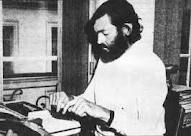
El sexo que transcurre entre ellos dos, el camionero y Dilia esta lleno de ternura y de longevidad, no de lo furtivo de la noche que suele popular el coito con el que se topa frecuentemente el camionero. Habiendo saciado su deseo, el narrador despierta del sueño para confrontar a su pareja, y con ella lo cotidiano. El se detiene pero no le cuenta el sueño a su pareja, y el día prosigue como debido.
Meses después, se reúnen las dos parejas, El y Niágara, Alfonso y Dilia. En esa noche comparten la muerte de la madre de Dilia, luego risas, bromas y coñac. En un momento, Dilia cuenta como ella se quedó extraviada y necesitada de ayuda durante ese tiempo en que viajaba a ver a su madre en sus últimos días de vida. Un camionero paró y la recogió. Este relato que ella comparte tiene dos partes, ella sólo comparte la primera con los otros. Ya tarde en la noche y bien curados con el coñac, el bebé de Dilia llora y ella corre a su lado. Aparte, mientras Alfonso y Niágara conversan y continúan bebiendo, el narrador se aparta y se dirige hacia Dilia, que le cambia el pañal a su bebé. En este instante es la tensión protagonista. El narrador la mira y ella se voltea y se miran a los ojos. El le confiesa que conoce la segunda parte de su relato, que ella se acostó con el camionero.
Ya expuesto en palabras reducidas el cuento, ahora hablaré sobre las maravillas de Julio Cortázar, como él entrelaza la realidad y la fantasía en un cuento. El juego de palabras con el cual tiende sus historias. ¿Cuál será la verdad de éste cuento? ¿Habrá sucedido de verdad el sueño del camionero? ¿Serán ellos dos, Dilia y el narrador, amantes?
En este cuento se ve claramente plasmado el deseo y lo maternal entrelazados y además, una melancolía permea cada imagen dibujada por las palabras de Cortázar. Es como si lamentara esos deseos y hasta posibles amores que no pueden llegar a florecer por circunstancias externas concretas.
This short story by Julio Cortázar, "Historias Que Me Cuento", features a dreamer for a narrator, one who weaves stories before going to sleep in order to expatriate himself from the tangible routine of daily life. These stories he creates often transform themsleves into dreams that populate his sleep. It recurs that in these dreams he is a trucker, enamored with the idea of freedom in the open road, the unexpected and the new. It so happens that in one of these stories he stumbles unexpectedly with Dilia, a woman he knows, stranded and alone at the mercy of the night. This he finds odd and surprising because the women he normally picks up in these creations of his mind are always unknown. As accustomed, he picks her up and rescues her from the rocky and solitary night. The expected occurs, conversation, drink, eat and sex. Yet, the union they share is not tainted with the customary furtiveness and insignificance that permeates his past encounters. This one holds a tenderness and longevity the narrator did not expect. Later, they sleep and he awakes to be confronted with his real and tangible woman, Niágara.
Months later, both couples, Niágara and the narrator, Alfonso and Dilia, meet for dinner and an evening of amiability. They eat, drink and share jokes over cognac. Further on in the night, Dilia retells an event that occurred to her on one of her visits to her mother during her last days of life. She was stranded, late in the night, and a trucker stopped and picked her up, rescuing her. This story had two parts, she only retold the first part to the others when her baby began crying from another room. She immediately went to the baby. The narrator finds his chance and leaves Alfonso and Niágara conversing. This is the moment when the tension seeps throughout the scene. The narrator approaches Dilia, she turns, and they both look each other in the eye and he tells her that he know the second part to her story, she slept with the trucker.
Now, what I find enchanting about this short story is the melancholy that pervades throughout the images created by Cortázar. In many ways, it's a quiet lament for impossible desires and even loves that are not able to flourish due to external concrete circumstances. All this, the maternal and desire interweaving, is once again exposed through Cortázar's excellent ability to intermingle reality with fantasy. His talent for warping time, space, the real and fantasy is latent in his sentences.
Wednesday, March 7, 2012
Recortes de Prensa de Julio Cortázar
"Aunque no creo necesario decirlo, el primer recorte es real y el segundo imaginario."Yo tengo un pequeño compendio de cuentos de Julio Cortázar, Queremos Tanto a Glenda. He ido leyendo los cuentos poco a poco, siendo Cortázar un cuentista detallado y excelente, sus historias se merecen varias lecturas despacio.

"Incluso la tortura, esa forma última en que la violencia se cumple en el horror de la inmovilidad y el aislamiento."Partiendo de aquí, la escritora le muestra al escultor, sobre una taza de café, unos recortes de prensa. En éstos recortes se relatan unos secuestros ocurridos en Argentina durante 1975-80, la Guerra Sucia de Argentina. Al leer estos recortes, las obras del escultor se ponen en perspectiva y se cuestiona de manera indirecta, ¿qué función tiene el arte ante las atrocidades reales que ocurren diariamente?
Luego de una conversación en la que se debate el tema del arte ante la sociedad, la escritora se retira a su casa. En el camino, ya tarde en la noche, ocurre una transición, un desdoblamiento de tiempo y espacio en el que ella se encuentra ante una escena de violencia doméstica, específicamente de tortura. El hilo se rompe y ella regresa a su hogar para luego, el día siguiente, escribir lo que vio. Esto es lo que le entrega al escultor para que acompañe sus esculturas.
Uno de los atributos que más me resalto del cuento es cómo Cortázar crea el desdoblamiento de tiempo y espacio. Similar a lo que hace un escultor cuando crea, moldeando, Cortázar moldea de tal manera sus palabras como para lograr transiciones imperceptibles.
El tema del cuento enfoca la cuestión del arte, en todas sus formas, y su función ante las disparidades de la vida, las injusticias. Por ésta razón, y para apreciar el estilo de este gran escritor, este cuento y muchos más de el se merecen una lectura. Con esto les dejo las palabras que le dijo el escultor a la escritora al haber leído lo que ella escribió.
"Es cierto que un escritor puede argumentar que si su inspiración le viene de la realidad, e incluso de las noticias de policía, lo que él es capaz de hacer con eso lo potencia a otra dimensión, le da un valor diferente."I have a small compendium of short stories by Julio Cortázar, an Argentine writer, Queremos Tanto a Glenda. The short stories found therein I've slowly been reading and savouring. Cortázar is a detailed writer and his works deserve a few reads to better grasp the nuances of his stories.
Being March the month I've chosen to dedicate to this excellent writer, I begin with "Recortes de Prensa". This story takes place in Paris. A sculptor invites a writer, both Argentines and friends, to show her his new sculptures. After revealing his work to her he asks that she write a piece to accompany the sculptures. The theme portrayed in his work is violence and its' many faces.
 Subsequently, the writer shows him, over a cup of coffee, newspaper cutouts relating kidnappings that occurred in Argentina during 1970-1980, the Dirty War. After reading these articles, the sculptors' art is put in perspective and to the forefront is brought into question the function of art in relation to the real and latent atrocities that occur daily.
Following a conversation in which this theme is debated, art in society, the writer parts. On her way to her house, late in the night, a transition occurs a blurring of space and time in which she, the writer, finds herself before a scene of domestic violence, specifically torture. The thread is broken and she returns to her house, later writing about what she saw. This is what she gives to the sculptor to accompany his works.
One of the aspects of the story that stood out is how Cortázar weaves the transition, the blurring of space and time. Similar to what the sculptor does when he creates his pieces, Cortázar molds his words in such a way as to create a shapely work of art, with subtle nuances and depth. This short story carries within it the question of art, in all its forms, and its function in the context of the disparities of life and the injustices. For this reason, as well as to appreciate Cortázar's style, Recortes de Prensa is worth reading, along with many of his other works.
Recortes de Prensa
Press Clippings (couldn't find online)
Monday, October 10, 2011
El Hombre Que Inventó Manhattan by Ray Loriga
Taking a breather from philosophy, I purchased "El Hombre Que Inventó Manhattan" by Ray Loriga. From what I've gathered he is a novelist, scriptwriter and movie director from Spain. I was completely unfamiliar with him and his work but I purchased it anyway, I enjoy taking risks with unfamiliar writers. So far, it's been amazing. It's a collection of short stories that at first seem independent of each other but as one progresses with one after the other each piece of the puzzle begins to fall into place with the next and so on. It is obvious that they are all interconnected. Which leads me to the hypothesis that that is the writer's intentions in this collection of stories which have as the center the City of New York. He weaves the stories, full of a wide diversity of characters, all interconnected by the fact that in totality they form the tapestry that is said city. There are elements of the morbid, the sick, a bit of perversion, sex, lies, yet there is a string of the enchanting in it all. As of today, I am in the sixth story, stopped in my tracks by a pair of wonderful sentences that commence the story, which is called "Peces Voladores", that left me pensive. With that I conclude this post.
"Para Andreas, lo más parecido a la felicidad era el ritmo constante de las obligaciones ineludibles que le sujetaban al momento presente como los alfileres sujetan las mariposas enmarcadas. Sin embargo, por mucho que uno lo deteste, a veces no queda más remedio que pensar en las cosas que uno no quiere pensar, especialmente en los días de lluvia."
Finishing this book, I am going to pick up another recent purchase written by this fellow right here. Yikes!
Happy reading.
"Para Andreas, lo más parecido a la felicidad era el ritmo constante de las obligaciones ineludibles que le sujetaban al momento presente como los alfileres sujetan las mariposas enmarcadas. Sin embargo, por mucho que uno lo deteste, a veces no queda más remedio que pensar en las cosas que uno no quiere pensar, especialmente en los días de lluvia."
Finishing this book, I am going to pick up another recent purchase written by this fellow right here. Yikes!
Happy reading.
Monday, October 18, 2010
Raymond Carver's Cathedral

Recently re-read Cathedral
 by Raymond Carver, which can be read here, and found the short story even more moving than the first time. Why? You may ask. Well, because it is simply brilliant.
 First of all, short stories are meant to express an idea in a linear matter, every word is precisely located so as to lead to the realization and the communication of this idea.
This is done masterfully in this short story. To start off, we have a first-person narrator explaining how his wife's blind friend is coming to visit, his antagonistic feelings towards this fact and the friendship between his wife and the blind man is evident, we also get from the narrator that his marriage is wavering on the brink of disintegration.
As the story progresses, the narrator opens up to the blind man. It is interesting how they both connect: after copious amounts of alcohol and a joint later they both find themselves watching a show on cathedrals. The blind man, having never seen a cathedral, asks for a description. It is from this point on that the essence of the story is revealed, the core. The narrator describes the cathedral, and explains how in the "olden days man built cathedrals because they wanted to be close to God" since its spires reach up, up, up into the sky, as if reaching out. From here the narrator discloses his unbelief, concluding that it is because he finds it hard to believe. After the description of the cathedrals the blind man asks the narrator to bring a pen and paper so as to draw a cathedral and better "see". The narrator does as asked and begins drawing, the blind man holding his hand as he draws. The blind man then requests for the narrator to close his eyes. He does and what is revealed to him is far greater than what he saw.
This short story is wonderful in that it explores the undertones of the spiritual essence of man, why is man despairing? What makes man despair? What allows him to have purpose? Live fulfilled? The narrator is despairing man and in my subjective judgment the blind man doesn't have the answers, this is not what is discovered at the end, rather what is revealed to the narrator is his life as it truly is, whether it is his necessity to be thankful or to mend the broken pieces is debatable just as what is revealed. The exploration undergone in this story brings to light that the truth is not necessarily for those that "see" with their eyes but for those that "see" with their heart/soul/spirit.
This story is simple yet this simplicity hides a raw and haunting quality that echos beyond the words.
Tuesday, October 5, 2010
Do you know Young Goodman Brown?

 , before this I had had no personal contact with Nathaniel Hawthorne. I only knew he wrote The Scarlett Letter, which I know is a popular book, since it is required reading in some high schools.
I must say my inexperience with Hawthorne slapped me in the face when I read this short story, I loved it. I perceived this story as an allegorical piece, resonating with truth, despair and human nature.
The action is set in Puritanical New England and it touches upon the themes of good vs. evil and its' role in human nature. The premise is: a man sets out on a journey at dusk, leaving his faithful wife behind, to go on an evil purpose.
To start of with the allegories in this story, first, the names given, the protagonist's wife, Faith, being his wife, tied to him with the strings of love, his love and his faith, stands as a symbol of faith and all the things in this world that are good and pure. She is the string that pulls the protagonist in one direction in the beginning yet after a decisive point becomes the antagonist. She represents the essence of what Mr. Brown is in danger of losing as he goes about his evil business.
Besides her representation, there exits the man that Mr. Brown meets on his journey through the woods. This man is not presented as sinister but as brooding, a learned traveler that resembles the protagonist. His resemblance signals his character in the protagonist's life, his active role in familiarizing himself with his prey and making himself seem relatable and harmless.
Then, onto the journey itself, the one Young Goodman Brown undertakes that stretches into the twilight hours of the night. This journey is life, the one that every human undertakes, walking through deep secluded woods, among dark paths, verdant and lush yet dark and sinister.
As the protagonist progresses in his journey he encounters doubts and truths that cause him to waver in many aspects: life, faith, sin, human nature. All this leaves him drained when he encounters what seem to be a "witch" gathering or what I'd prefer calling a gathering of sinners, of those who've strayed. In the midst of this, Young Goodman Brown comes to the conclusion of how he will lead his life, his perspective changes and his will is sealed. He undegoes a transformation that echoes for the rest of his days.
To end, I say that this short story by Nathaniel Hawthorme is vividly and masterfully written. If you haven't read it, do so.
"Say thy prayers, dear Faith, and go to bed at dusk, and no harm will come to thee."

Subscribe to:
Posts (Atom)
